Wednesday, June 20, 2007

Riding Gear

This first part is for new riders. If you know about the importance of gear, you can skip down to the links. You can never get enough safety information so feel free to read through it and give some feedback if I left anything out or you feel there are any mistakes.

Basic gear that I would recommend:

Leather or Vented Jacket - These comes in various forms. Riding specific jackets will have
built in protective crash pads and the materials used are intentionally used to keep your skin from being all rubbed off by the asphalt. A non-riding specific leather or heavy jacket can do well to protect you from abrasion, but the built in armor that you get with a riding jacket could mean the difference between a dislocated shoulder and a minor bit of soreness. The jacket on the left is a vented textile jacket from Teknic that has remained in pretty good condition after two falls. It is fully vented and I stay relatively cool so long as I'm moving. The jacket on the right is part of a full 2-piece leather suit that I had tailor made from ArmorWorld. I'm very proud of the suit as it was fully tailored for my body and every measurement was taken in order to ensure the perfect fit. Both jackets have built in shoulder, elbow, chest and back protectors.

Heavy Jeans or Riding Pants - Don't ride in
shorts. Don't ride in shorts. Don't ride in shorts. Don't ride in shorts. Don't ride in shorts. Don't ride in shorts. Actually, if you like skin grafts and want to rub off some skin into the asphalt, go ahead. Jeans actually offer little to no protection, but I'd recommend heavy jeans as the utmost minimum as they will give you at least a few seconds before you're using your own skin to protect your bones from being grinded down. The leather pants on the left are the lower piece that zip up to the jacket to make a full suit. The jeans on the right are "kevlar enforced" riding jeans from Draggin Jeans. You can see the yellow cloth where by the seat of the pants, that is the kevlar and it is supposed to have better resistance to tearing when dragged on the ground.

Leather Gloves - Basic principle behind leather gloves is like that of all your other gear, that the leather will be rubbed off when you skid on the ground before it gets to the soft and delicate skin on your hands. I've gone down without gloves
and having to scrape out gravel chunks and dealing with peroxide isn't very fun. The gloves on the left side are Knox Handroids, brand spanking new for 2010. These are full gauntlet gloves and may be overkill which is why I also have "street" leather gloves from Alpinestars.


Boots - The big thing with foot protection is that
you want to protect your ankles so even
low-cut boots that are tied securely will be of
great benefit. Sneakers will literally go flying in almost any crash you have... again, I learned the hard way. The boots on the left are "street" boots from Joe Rocket which are easier to take on and off when I'm commuting to work or not planning on doing really aggressive riding. I have even played basketball in them and they were fairly comfortable. They have served me well through one crash and my ankles and feet were relatively uninjured. The boots on the right are close to full race boots from Alpinestars and are a bit uncomfortable for daily use. These are both motorcycle riding specific boots, but so long as your boots are tied securely, go over your ankles and aren't steel-toed, you should be fine. I know that having a steel-toe might help you in the case that you're working in a construction setting, but in the case of a crash, the steel toe can be ripped from the boot and take your actual toes with it.

Helmet - Back up there where I told you to try running
and diving onto the asphalt? Try diving onto the asphalt from even a standstill and see how your skull holds up. HJC helmets are a cheap helmet, readily available in Korea and will do a good enough job as they are mostly DOT (American certification for protection criteria) certified. You can check for DOT certification by looking for a DOT sticker on the shell or under the inner padding. Shoei has recently entered the Korean market so they are now available here. I had to purchase mine in America and bring it over as Shoei's were not readily available here at the time. I crashed in the Shoei and replaced it with a carbon FS-15 HJC helmet. The rule of thumb is that you should replace your helmet if it hits the ground after it has been dropped by anything more than shoulder-height or if you crash and it hits the ground. There is some kinda foam/Styrofoam under the shell that compresses when the helmet crashes and once that material is compromised, the helmet becomes more or less useless. The shell can also be compromised without you being able to see it. The half-helmet on top is pretty much a souvenir from one of my motorcycle purchases and doesn't even fit my head, but can also offer some protection and may be right up your alley, although I wouldn't suggest it if you plan on doing anything more than "around town" riding. If you want some more definitive information on helmets, I would recommend WebBikeWorld Helmet Reviews. Web Bike World Helmet reviews are some of the most comprehensive motorcycle helmet reviews I've ever seen. They cover everything from weight to wind noise and even discuss interior helmet shape to help you figure out what matches your skull's shape.

Other Stuff - They sell other stuff for protection like knee pads, elbow pads and even full body armor to wear under your clothes. This is up to your discretion, just use your best judgment and remember that you should still have relative freedom of movement or in other words the gear you wear shouldn't be too constricting. These are some knee pads I got as a gift from a friend. I know I look doofy when I wear them while riding a sport bike, but changing pants at work has become a bit tedious. These aren't necessary, but besides the fact that they will protect me in a crash, if you ride at speed you can be hit in the knees and shins by pebbles or rocks and these will make sure you just find it mildly irritating rather than painful and terribly distracting.

So how much should you pay? Protective gear goes by the old adage, "You get what you pay for". There are plenty of sites like Passo where you can find cheaper used gear to buy and you can also go shopping for gear at shops. I like to go window shopping at ToeGoe-Ro, which is known as "motorcycle street" in Seoul (Chungmuro Station in Seoul (Light Blue / Line #4), Exit 1, if the Dunkin Donuts is on your right side keep walking straight and you'll know you're getting close when you see a couple pet stores with puppies on display).

Reliable websites that sell gear:
http://www.bikemart.co.kr
http://www.helmetmall.co.kr
http://www.hungryrider.co.kr

A Korean web search for : 오토바이용품 will give you plenty of sites to choose from. You can also find riding gear on Gmarket.com and Auction Korea, but they will try to sell you on anything so I'd recommend you try and find something you want from a reputable motorcycle gear dealer and then shop around on sites like Gmarket.

It isn't really necessary to have two sets of riding gear, but the "street" gear that I have listed were my first purchases and the "race" gear was purchased because I plan to eventually hit some track days and they won't even let you step onto the track with anything less than I have posted.

It's difficult to walk away from a crash on the streets unscathed, but proper gear will go a long way in absorbing shock and keep your skin from being sanded off.

Tuesday, June 20, 2006

Buying a Motorcycle

So now you feel that you're ready to take the plunge and you want to start shopping around for a bike. Buying a bike can be a tricky affair in Korea. As with buying a car you have the choice between new and used. For the most part, I'd recommend a used bike for several reasons. Used bikes are cheap, they can be sold with little to no loss, and if you don't like the used bike you bought there are people who are willing to "trade" you bikes. Also, you'll often find used bikes with aftermarket parts for dress up and performance which makes your life easier if you plan on taking that route. The thing that really bothers me most about buying new in Korea is that there is a really high tariff for imported vehicles. If I ever consider buying new, I think of US prices and when I think of Korean prices I keep thinking I'm getting jipped. If you plan on living here, new is probably a good option. If you're just "passing through", then I'd suggest a used bike so you don't take a hit when it comes to resale value.

In the two years that I have been here, I have been the owner for 4 different bikes; Hyosung Exiv 125, Hyosung Comet GT250R, HSRC Drift 125, and a Yamaha R1.

The Hyosung Exiv was bought from a motorcycle center. Now, depending on what you're looking for, a local motorcycle center is probably the easiest process to purchase a bike. Most of the time you get a limited warranty and the motorcycle center will help you with all the paperwork that is involved. There are a few problems with motorcycle centers, however. Just like in America, you can expect a generous mark up on the price of the motorcycle. The good thing is that you can haggle for the price. In general, all the rules for bargaining at your local marketplace applies to when you buy a motorcycle so just shop wary and shop smart. One additional note, just because the shop gives you a warranty doesn't necessarily mean the bike is in good condition so make sure to check it thoroughly before purchase. Later in this post I'll give you a set of pointers to look out for when purchasing a used bike.

The Hyosung Comet GT250R and the Yamaha R1 were bought through online websites.
Http://www.passo.co.kr
Http://www.bikemart.co.kr
Just in case you can't find the link, used car/bike is "중고차" in Korean so just look for ththose words. The rest of it is pretty self-explanatory. These sites are pretty much the "autotrader.com" sites of Korea. You will find that the prices on these sites are much lower than motorcycle centers and you will have a larger selection of bikes to choose from. The sellers range from large motorcycle dealers to high school students who were forced to sell their motorcycles because their parents found out they had secretly bought one. The Korean word for negotiation is "절충" so if it says "절충가능" the price is negotiable and "절충불가능" mean the price is not negotiable. You have to be extra wary when purchasing a bike online, but there are plenty of good bikes available and people post up ads daily. I would recommend you use Passo over Bikemart as Passo is more popular and people tend to post up cheaper prices, but it doesn't hurt to check both.


My HSRC Drift was purchased from a friend. Now, if this option is available to you, it's probably . It doesn't even have to be a friend, but just any other foreigner who has a bike. You can find motorcycle for sale ads on craigslist Korea as well as teaching forums like Waygook.org. The reason I say that this is your best bet is because you can discuss any problems directly (if your Korean isn't perfect) and the ability to communicate means they can help you through the registration process.

There is also the option of buying new. A new bike has a warranty and you have the piece of mind knowing that the bike is in perfect condition. Bikes are often crashed and dropped and the sellers will lie about it after making repairs. If you have the money and can find a dealer, this may be a good option for you as well.

Used Bike Buying Checklist (Things to do to check the condition of the motorcycle):
Start and shut off the engine a few times. When you first start the bike, put your hand by the engine to see if it is warm. What you're doing here is checking how well it makes a "cold start". Motorcycles generally have a more difficult time starting up when the engine is completely cold. Most smaller and older bikes are carberetter fed so don't expect a perfect start, but it shouldn't take longer than a few seconds or a small pull on the throttle while you're hitting the ingition button. The reason you do this is to make sure the starter and battery are good as well as other things that could be affected on the inside like spark plugs and fuel delivery.
- On a side note - A dead battery is not the end of the world, but it could make things difficult later on. Many batteries suffer greatly in performance if they are completely discharged and left to sit for a while. If the bike needs to be charged, there's a good chance the battery has lost a lot of its potential. If you can start/stop the motor about 5-8 times without any starting issues, the battery is fine. If not, try to negotiate for a free battery replacement. In the case they say no, a new battery will run between 30,000 Won - 130,000 Won depending on your make and model.

Listen to the engine/exhaust noise. Does it sputter? Does it sound like the engine noise is going up and down considerably? Are there any weird ticking noises? (Yamahas and Chinese bikes make ticking noises in general so they are an exception) When you pull on the throttle, does it rev up freely or does it seem to struggle and have difficulty as it is revving up? Being able to tell the signs of an engine problem through the noises that a motorycle makes only comes with experience so try to track down a reliable third party to help you make these calls.

Look at the smoke coming out of the exhaust. Scooters give off a lot of black smoke, but that is normal. If you're looking at almost any another motorcycle, the smog coming out of the exhaust/muffler should at most have just a slight tinge of black. If the smoke is blue (burning oil), white(burning coolant), or really dark and sooty (not burning enough gas) just move on and forget you even saw the bike. On a side note, this is pretty much a given, if you are looking at the bike on a cold day the smoke will seem white, but that's more likely due to condensation than burning coolant.

Grab the brakes while standing in front of the bike and rock the bike back and forth. The purpose of this is to check the suspension. The bike should have a slight bounce to it and should offer resistance as the springs compress. Again, being able to judge this comes with experience, but use some commons sense. If the bike seems to compress the suspension too easily, then it's probably an issue. Sit on the bike and see how much it sags. The bike should sag a bit, but you should not hear any clunks or bumps as the suspension compresses. Now, while sitting on the bike you should hold the brakes and rock it back and forth. There should be even less give and absolutely no clunking, bumps, rattling when you rock the bike back and forth while you're sitting on it. Despite what you may think, suspension is one of the most integral parts of a bike's performance. Suspenion repairs generally run more expensive than usual stuff so be extra wary with this. Another way to check the suspension is to check the actual shocks (the bars that sit inside the springs) after you've sat on it and rocked it around a bit and see if there is any liquid leeking out.

Check the tires' conditions. I would recommend you google, "When should I change a motorcycle tire?" and follow the guidelines you find. They will generally inflate the tires for you when you buy it so underinflation is a non-issue.

Things to do after you've bought the bike:
Change the oil/oil filter - the seller will tell you that they recently changed the oil. They are probably lying.

Change the sparkplug(s) - same as above. Although the spark plug shouldn't need that much servicing, it's a good piece of mind and relatively cheap to do.

There are certain things that any motorcycle dealer will do for you when you buy the bike, but if you buy it from a private seller, get these done as well:
Lube/Oil the Chain
Check Chain Tension
Check Tire Pressure and inflate/deflate as necessary

Wash your bike, have a friend take a picture of your next to it, pat yourself on the back, try to get some sleep that night and enjoy the ride.

My experience isn't all encompassing as I've never purchased a new bike and there are other ways to find a used bike. One other option for you is to join a online community (Daum Cafe) and login to motorcycle club websites and check the for sale ads. This is a bit difficult for foreigners to do as we don't have the proper credentials, but you can ask a native friend for help. Buying a vehicle here is pretty similar to buying one in America so just use common sense and don't get too excited about the purchase and make a quick purchase without making sure your bike is in good condition.

Tuesday, June 21, 2005

Registration and Insurance

This is actually a fairly simple process that can be made complicated by incompetent bureaucrats. You need to purchase insurance before you register your bike. Registration is not necessary for scooters, but everything above that will require registration. You will be running between 3-4 buildings depending on the layout of your local offices.

There are many auto insurance companies in Korea. So far, I have only had Hyundai Insurance and they are your typical insurance company who will try their best to increase profits over coverage. You can also check with Meritz, Samsung, and many others available as smaller companies. From what I understand, most insurance companies are the same when it comes to insuring your bike and the main difference is price. I haven't purchased insurance online. I went to the insurance office in person and purchased insurance. Just to give you an idea of pricing, the insurance for both my Exiv 125 and Comet GT250R were both 300,000 Won for the year. You can cancel your insurance early and receive a refund and as you probably won't be riding in the winter, this is good way to save yourself a few bucks. The insurance for my Yamaha R1 was just over 400,000 Won for the year. I only had liability and did not bother with full coverage. For the most part, full coverage doesn't give you much extra when it comes to motorcycle insurance as there is no theft protection.

After you have purchased insurance, you will have to go to your city hall or town hall and register your vehicle. You will need your passport and foreigner registration card. They will ask you for a "도장", but most foreigners don't have one so just explain that you'll just give your signature. The word for registration is "등록". Registration requires some paperwork and some fees. They will ask you the value of your motorcycle, tell them 100,000 Won and if they ask you why it was so cheap, tell them you bought it from a friend. There will likely be a bank there, but if there isn't be prepared to find a nearby bank to purchase registration stamps. They will more than likely help you out with all of this so don't worry if you're a bit confused right now. After you have registered, you will have to go back to your insurance company or fax them the information. Now that you're registered, you have to pick up your license plate. There is usually a separate facility that holds all the license plates. You will have to bring your receipt of registration to them and they will bolt your license plate to your bike for 10,000-15,000 Won, this is including the price of the plate itself.

Once you have a license plate, you're all set and ready to ride legitimately. I know it may be a pain to get around to all of these offices by foot or taxi so just take your bike, just ride really carefully. The police won't bother you too much if you ride without registration and if they do, just tell them you're on your way to get your bike registered.

Monday, June 28, 2004

A Weird Road

Well, I believe I've gotten a lot of the preliminary stuff out of the way so I'll start sharing about random roads I find and trips I take. This entry is about a quaint little road I found nestled adjacent some twisties I was exploring. I posted a youtube video and it's at the bottom if you don't feel like reading.

Well, I was riding around and getting my bearings on some new twisties I had found and on my way down the mountain I saw a strip of black going into the woods. Well, for the sake of my blog I decided to investigate and report my findings. The road is located right before Dunnae after passing HoengSeong. If you are on route 6 and find a road that has two lanes and is uphill and twisty, you'll see it to your left. These are the first decent set of twisties you'll run into on your way towards Dunnae. You'll come to a right-hander that has an extreme decreasing-radius and it'll be on your left (You'll know it when you see it). I'll be posting vids of the twisties on an upcoming entry, but the footage I took was unbelievably blurry so I'm going to try and reshoot it sometime this week.

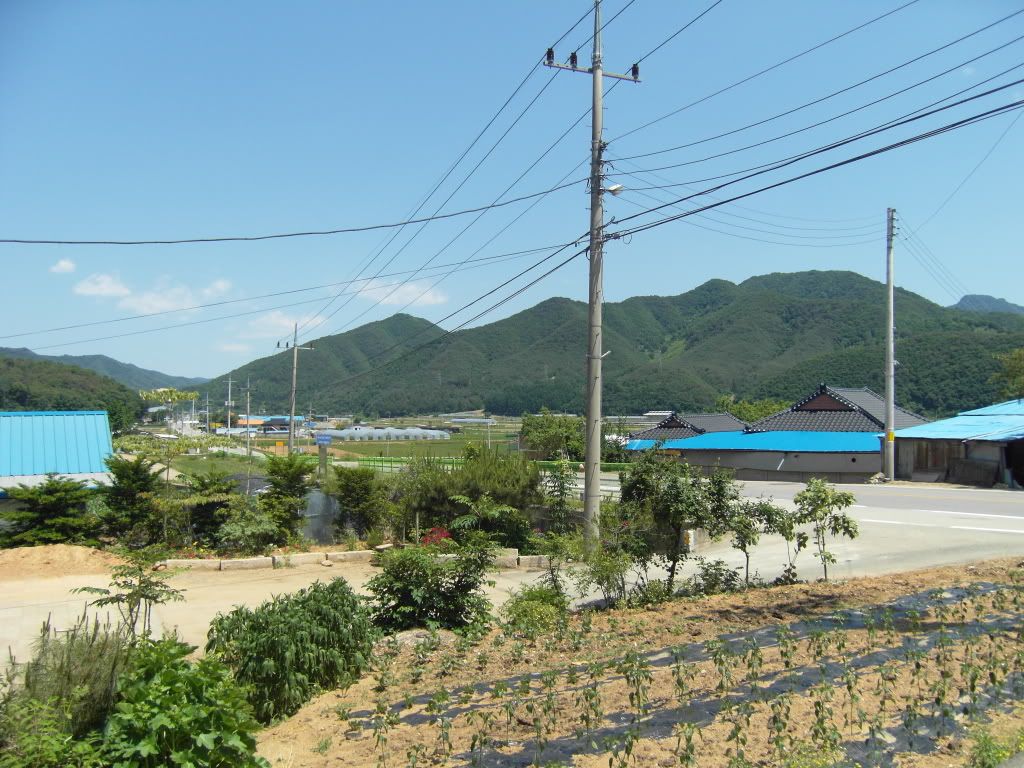
I wasn't sure if it was a one way road or not, but there was random spots of sand and it's lucky I decided to proceed cautiously. It was an unbelievably sunny day and conditions couldn't have been better for riding. Towards the end of the road, I found a few farms and houses, but nothing special as a destination. The road isn't that great for wringing-out and balls to the wall riding as there are random piles of sand here and there, which I'm assuming were put there by farming machinery spillage.

Why have I decided to devote a post to this little road that leads to nowhere? Because if riding has taught me one thing it's that the destination is just an excuse. Although a sport bike isn't necessarily the best equipment to go "exploring", I didn't mind taking a little break and taking a stroll down this mysterious road.


My next posts will be about some of my favorite local and not-so-local twisties. Don't look at my blog for "fast-riding" because I'm not fast... yet, but there are some skills you just can't hone safely on the streets. I apologize for the shaky cam and my "point-and-shoot" style of riding, but I only ride as fast as I can see and slow moving trucks around blind corners are a killer for riders in Korea.

Saturday, July 5, 2003

Morning Commute to Naechon Middle School

I teach at 3 locations and 4 different schools. Naechon Middle school is located in Naechon county and is about 20-30 minutes from my house in downtown HongCheon. The first leg of the journey is a lot of highway riding, which is excruciating on a bus, but is not so bad on a bike. Morning commuters are a lot more friendly on the road than weekend travelers so it's a bit more of a breeze to negotiate my way through traffic on the way to school. I'm planning on putting together a compilation of highway riding as most of it is fairly boring to just watch.


This particular school is in the middle among all of my schools as far as distance from my apartment. I'm going to have more and more trouble filming as it is currently the typhoon season in Korea and although I don't mind riding in the rain, my fragile point and shoot digital camera does. The furthest school I teach at is about five minutes down the road, but as the rain is becoming more and more unpredictable, I decided to film this as the morning sky looked clear that day.

This particular road goes through a lot of farm land and there is also some construction going on further down the road. What does this all mean? Random piles of dirt and mud washed all around if it happens to rain or the construction workers wash down the dirt. Even though there are a few hazards, I find my commutes to and from this school thoroughly enjoyable. Cutting down on the pace doesn't particularly seem to mean cutting down on the fun factor. I have had a few mishaps on this road. One time I had a dump truck taking up a lane and a half just around a blind corner and ended up locking up my rear tire while still leaned over. Luckily, I was riding cautiously and I simply glided my way over to the shoulder. If you look at the video, you'll notice that there are yellow and white striped bars on the road at certain places. Some of them are speed bumps and others aren't. Last year I got extremely lucky on my 250 when my tail kicked out from under me and I should have in all rights highsided, but instead I just ended up having one of the most ass-puckering moments of my life.

The scenery really is beautiful along this route. If you are heading away from HongCheon towards Sokcho, you get off after you pass through a tunnel and come to your next light with a police station to your right.

There are quite a few blind corners where they have convex mirrors set up so I can still have a bit of fun without worry of running into a stopped or slow moving vehicle. Although I don't hit this commute hard enough to get the normal adrenaline rush of riding through twisties, it still works to get me to school with a smile on my face and to bleed off stress on my way home. On a side note, I wouldn't suggest you pay too much attention to the scenery around you if you commute to a rural school on a motorcycle. I'm just making note that the scenery is there. Farming vehicles and cars seem to appear randomly at times and because many people have the mentality that no one travels the road due to its rural location, you'll have people parked on the road for no reason. Also, do not take the random dirt piles lightly. There have often been times when I have had to travel for a good 100 meters or so over a layer of dirt. I was on another country road once and there was a pile of dirt in the middle of the road right as I passed the "point of no return" in a blind left hand turn. My front wheel completely cocked to one side, my bike pushed forward and slid out to the median about a foot before I regained control. I don't want to detract you from riding country roads here in Korea as there are many opportunities for you to explore, but just be cautious. I've taken the habit of scouting a course once before I decide to have some fun on the road and it might be a good idea for you if you're spending the day on a set of twisties. If you count the oncoming cars and pay attention to the road surface, you'll be able to manage your pace so it remains at a safe level.


Friday, July 12, 2002

HongCheon to HoengSeong

I recently went on a tour with ChunCheon SpeedBike. CCSB is a club of riders who are all really cool people and even better riders. I've been riding with them for most of this season and it's been a blast.

Most of our tours involve going to eat lunch at some random place. A couple of weeks ago, we decided to go to HoengSeong to eat some HoengSeong Beef Soup. Now, if you don't know about Korean beef or don't live around Gangwon-do, you might not know about HoengSeong Beef. I don't like to say I am a connoisseur of beef, but I do eat a lot of it and let me tell you this,

HoengSeong beef is some of the best beef I have
ever ever ever had. The cows are never given
any steroids and are free-range as far as I know.
I've been to the HoengSeong cow farms and it looks like they are given great treatment... besides the fact that they are eventually cut up to be served as food. Anyways, I was excited and decided to bring my camera along.

The food we had can be seen in the picture to the right. You get a stone pot of beef stew and then another stone bowl on the side with rice. You take most of the rice and put it into your soup bowl and then pour some water into your rice bowl and put the wooden lid on it. While you eat your soup, the water and rice cook and you get something called 누룽지, which is basically burned rice porridge. I'd suggest you don't knock it until you try it because it is delicious.

The ride wasn't that long, it was probably about 20 minutes from HongCheon. CCSB started in ChunCheon of course, but I woke up late and decided to meet them by the bus terminal by my house. It wasn't the usual ride leader and we had a couple new faces in the group so the riding was a bit disorganized, but we all got there and back safe so I'd count it as a successful tour. It was an extremely hot day so most of us opted for vented gear. Although I don't own an exo-skeleton type jacket, I bet it was great in the heat. All in all, it was a fun ride and the food was great. Here's a short edited video of our highway ride. Enjoy.


Thursday, July 12, 2001

ChunCheon SpeedBike

ChunCheon SpeedBike is the riding crew that I ride with regularly. Now, I know the store front says, "Win Bike". This is the shop where ChunCheon SpeedBike meets up and the owner of this shop is the leader of the crew (재명). I had originally come here way back when I had my Hyosung 250. Although it didn't really require full synthetic engine oil or NGK spark plugs, most other shops looked at me funny when I asked them about it. Win Bike is the only shop I've been to where the guy working on my bike has done what I asked and always pointed me in the right direction when I had questions. You would expect that if I wanted something extra that the shop owner would try and squeeze as much money out of me, but this guy's always pointed out cheaper options or better alternatives. If you want to find his shop, if you are going down route 5 with the Ganwon Education University (강원교육대학교) on your left, make a right at the next intersection and go up for a bit and it's a couple stores before the 애막골 post office. Don't worry, he actually speaks some English and knows almost everything you need to know as far as motorcycle needs in English.

The owner of this shop has owned several bikes including: several Honda CBR900RRs, Honda
RC51 SP2, Suzuki Hayabusa, and many more I can't recall. Every time I ride with him I've been wowed in one way or the other by his riding talent. He's currently riding a Honda CBR900RR which he rebuilt himself. You can see him to the
right messing with the suspension settings.

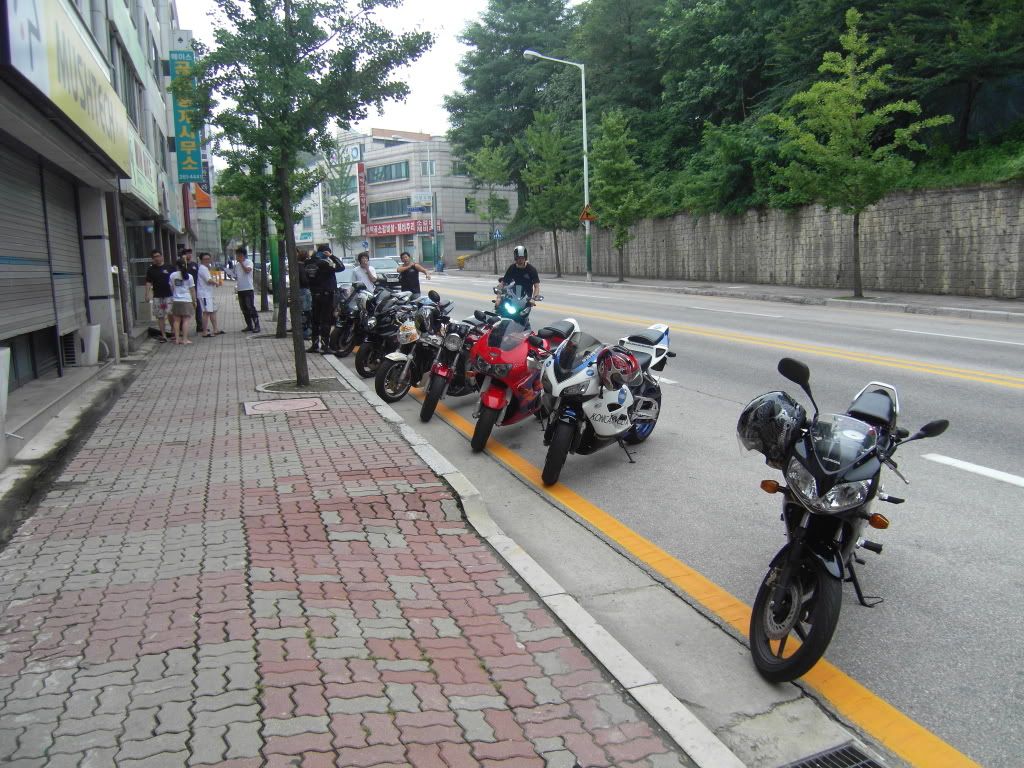
Most of the guys in the crew ride liter bikes. Back when I was riding my Comet 250, I didn't really have the power t0 keep up with them on rides. When I purchased my R1 and brought it in, 재명형 asked me if I wanted to ride out. Ever since then it's just been good times and great memories. Often after work I'll just ride over to ChunCheon to hang out at the shop, even if there are no particular plans and there are always a few guys in the crew hanging out to shoot the shit or plan night time rides. To the right you can see what it looks like inside the shop. Many crew members keep their bikes at the shop for storage as people don't generally have private garages in Korea. Right now it's a bit barren as this was right after a ride and many of the bikes are still parked outside. As you can see, he does work on everything from scooters and 4x4s to big bikes. It's fun to visit the shop just to see all the two-wheeled eye candy laying around the shop. Here are some pictures from a recent dash n' dine. No video, but this weekend we rented a pension somewhere north of GangChon and the next day we rode around ChunCheon. We took a trip up to Soyang Dam and then went into downtown ChunCheon for dinner.

Thursday, August 17, 2000

Farewell Post: Tour to Sokcho

Well, where have these last two years gone to? I guess that's a really cliche way to start this final post. In a short term perspective, this is going to be my final blog. I am leaving for America on August 31st, which is only a couple short weeks away. I could technically continue blogging here since this blog is also about my personal development as a rider. Well, I guess I'd rather make this a short and concise chronicle about my time riding here in Korea and end it on one of the best of notes. Who really knows where my life will lead from here? For now, these will remain as some of my most treasured memories.

This past weekend, I had the privilege to take a two day trip with ChunCheon Speed Bike.
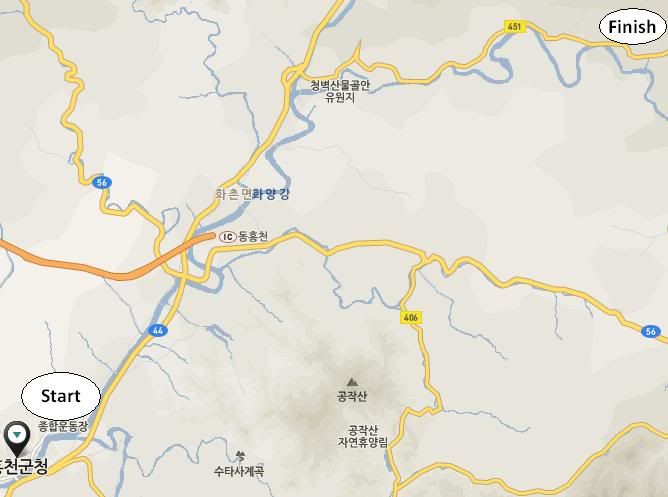
The destination was Sokcho, which wouldn't have been much of a ride except we took a route through some
of the most wayward mountain routes I've come across. The plan was to ride to Sokcho, eat lunch on the way at a rest stop and then proceed to the beach where we would do beach stuff then return to a cot that we had rented for some Korean style BBQ and soju. To the right was a picture of the first rest stop we made. I tried to be a photo ninja, but ended up being too pronounced in the photo.

The ride was somewhat stressful as we were trying to keep a moderate pace so that no one fell too far back. If you've ridden a sport bike, you know that it's about ten times more exhausting to ride slowly as opposed to a bit spirited. Well, once noon hit we decided to take a rest under an overpass to enjoy lunch when the sky decided to open up. In the photo on the left you can see that I decided to use my fuel tank as an improvised table. Don't worry, my riding jacket made sure there was no food spillage. Anyways, after we had finished lunch, the rain had still not let up. And this wasn't a light sprinkling where all we had to worry about was having to wash our bikes again, but this was a torrential downpour that left all of us soaked to our underwear. The rain was actually so bad that even cars stopped under the underpass in hopes that the rain would stop. What did we do? Well, what else was there to do but ride for an hour in formation through the twisties while getting drenched to the skivvies? After an hour of riding through this, we broke clear of the storm and hit the coast.

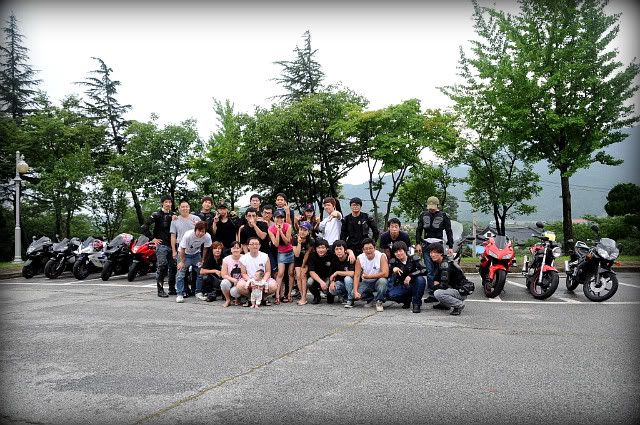
As you can see in the picture to the right, we wore uniform shirts that we had printed up just in time for the tour. They weren't made specifically for the tour, but are more like a "team shirt". Although we did some swimming, most of our time on the beach was spent sneaking up on each other and throwing each other into the water.


We grilled and drank into the night.
Our fearless leader had a pickup
truck type deal where we loaded everything including luggage and iceboxes of deliciousness for the trip. After we eventually unloaded everything, we used the half-barrel grill and tons of charcoal to got down to business. The menu included Korean bacon, Dak Galbi, and loads of soju and beer.

It wasn't my original intention to meet new people through riding, but in the end I'm glad I did. Living in another country for any period of time can be a difficult adjustment and this last year did a number on me as far as exercising my patience. Being able to meet up with this crew of awesome people and awesome riders helped me weather more than a fair share of storms. I'll be looking forward to the day that I can come back to Korea again and ride out with ChunCheon Speed Bike. Thank you.